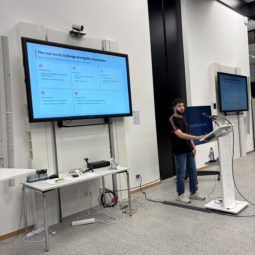
AI-Powered Tutoring for HPC and Digital History
Discover how HPC-MentorFlow and the History of Lesbos Chatbot use AI to make learning more personalized, reliable, and adapted to specific educational contexts.

Discover how HPC-MentorFlow and the History of Lesbos Chatbot use AI to make learning more personalized, reliable, and adapted to specific educational contexts.
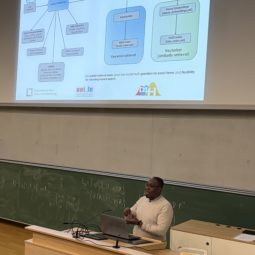
An invited presentation at the 12th International Conference on New Findings in Humanities and Social Sciences in Oxford, exploring how AI-driven retrieval and generation techniques can support historically grounded narratives from World War I archival collections.
Get to know the 2026 Eurovis Conference (the annual European conference on data visuazation and visual analytics research).

Frédéric Clavert provides his perspective on the “Eighth Conference on Digital Humanities and Digital History”, recently hosted by the Luxembourg Centre for Contemporary and Digital History (C²DH) at the University of Luxembourg, Belval Campus, on 15-16 June 2026.
The “Deep Dat Science for Digital History” doctoral training unit (D4H-DTU) hold its yearly event at the Robert Schuman House in Luxembourg. It was a fantastic day full of great workshops, excellent food, and a very nice working atmosphere!
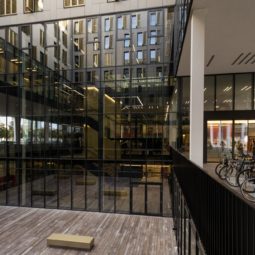
End of semester summary of DTU Activities. Have a look at the wonderful talks we were lucky enough to have throughout the 2026 spring semester!
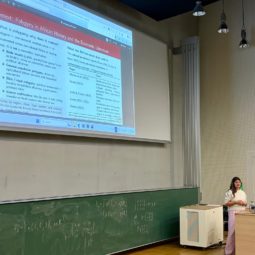
Source code must survive before it can be used as a historical source, yet code has not traditionally been treated as something worth preserving. In practice, it runs, gets overwritten, deleted, lost to hardware failures, or simply neglected. That is why the question of whether code deserves preservation is not purely technical: it is historical and political, as is the question of who bears responsibility for ensuring that preservation.
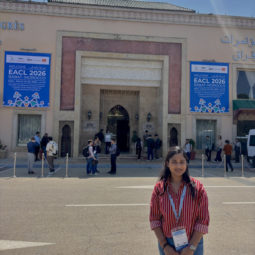
At EACL 2026 in Rabat, Morocco, presenting RAGVUE became more than a conference milestone. It was a journey through research conversations, culture, and one central question that matters across research domains: How can we trust LLM-generated answers?
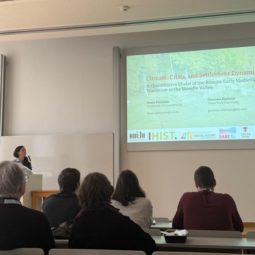
In this blogpost Ilenia Petrarulo explains to us her really interesting work presented at the 53ed CAA International Conference, hosted by the University of Vienna from 31st March to April 2026
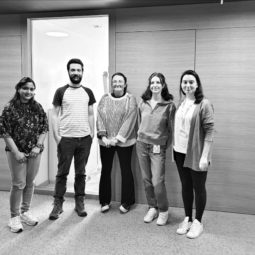
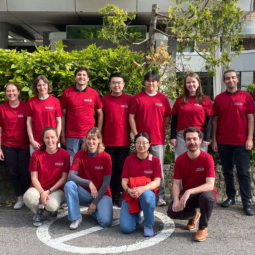
In this blogpost we would like to take you with us behind the scenes of the inner workings of this website! Therefore we would like to introduce you to the DTU website team (past and present!).