The Source Code Exhibition

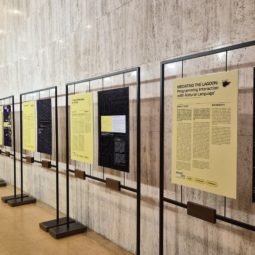
Source code must survive before it can be used as a historical source, yet code has not traditionally been treated as something worth preserving. In practice, it runs, gets overwritten, deleted, lost to hardware failures, or simply neglected. That is why the question of whether code deserves preservation is not purely technical: it is historical and political, as is the question of who bears responsibility for ensuring that preservation.
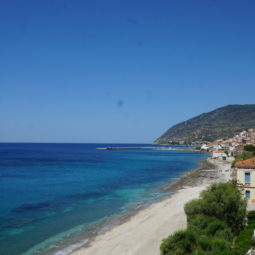

The Lesvos Summer School, 2025

This spring I’ve had the opportunity to go on a research stay to the University of Sydney in Australia. What started as a simple email to an archaeologist who works on Pacific island archaeology, because of my interest in one of his books, turned into the idea that we could collaborate and share research methodologies while also presenting my work to a new audience and talk with students hoping to study abroad, all while being able to visit home for the first time since 2022.

A Research Stay at Home

This spring I’ve had the opportunity to go on a research stay to the University of Sydney in Australia. What started as a simple email to an archaeologist who works on Pacific island archaeology, because of my interest in one of his books, turned into the idea that we could collaborate and share research methodologies while also presenting my work to a new audience and talk with students hoping to study abroad, all while being able to visit home for the first time since 2022.

Doing Digital History, from Luxembourg to New York

What are the challenges of born-digital data for historical research and archival sciences? How to deal with digital memory technologies like SIM cards as material evidence of the digital age? How to decolonize archival meta-data and descriptions when translating analogue collections into digital repositories?