
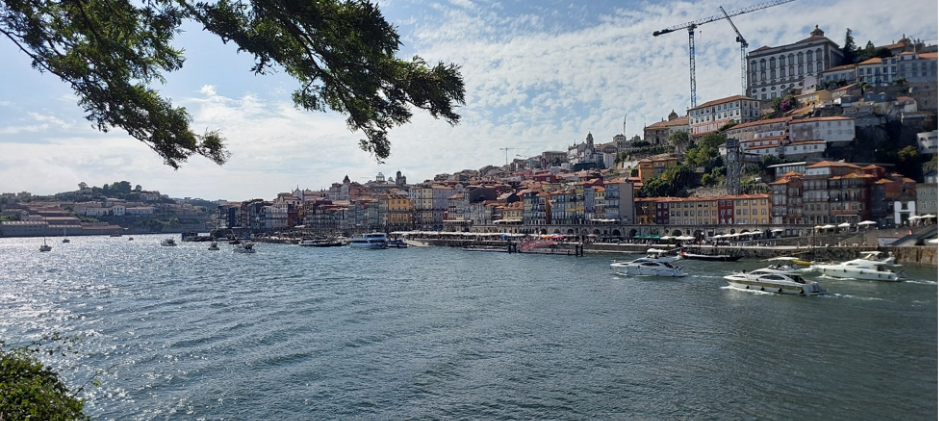
There’s something about Porto that stays with you. Maybe it’s the way pastel-colored buildings tumble down hillsides toward the Douro River. Maybe it’s the salty sea breeze that carries whispers of a centuries-old port. Or perhaps it’s the city’s simple and modest soul.

Author: Hassan Kassem
Hassan Kassem is a PhD candidate at the Department of Urban Development and Mobility at LISER. He works on the project “A Data-Driven Machine Learning Solution to Analyze and Mitigate People Exposure to Air Pollution” under the supervision of Hichem Omrani.
At the heart of Porto, the 13th International Conference on Energy and Environment Research (ICEER 2026) was hosted by the School of Engineering (ISEP) of the Polytechnic Institute of Porto from July 15–17, 2026. This annual gathering brings together professors, engineers, researchers, and professionals from around the world to tackle the defining challenges of our time: sustainable energy, environmental protection, and the future of our planet.
Presenting at ICEER was an opportunity to showcase research that sits at the intersection of environmental science, public health, and data-driven urban planning.
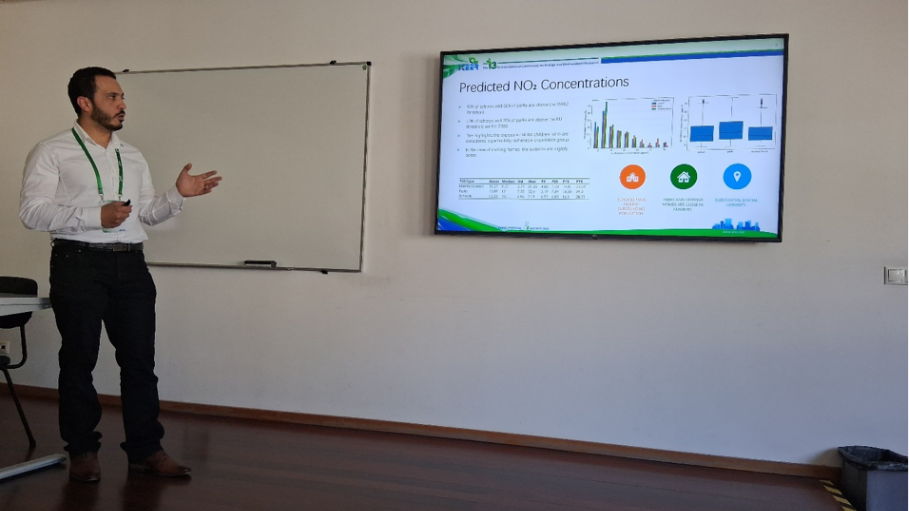
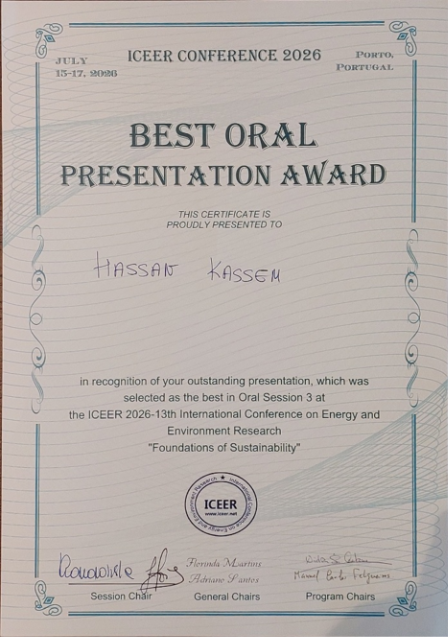
My presentation, titled Exposure to Air Pollution and Spatial Disparities at Sensitive Locations in the Greater Region of Luxembourg, caught the attention of the committee and attendance, and earned the Best Presentation award in the corresponding session.
What the Research Revealed
The study tackled a question that’s both simple and profound: it’s not just about where air pollution exists, but who is exposed to it.
Using a previously developed advanced deep neural network model (CaugDNN) that combines satellite data from Sentinel-2 and Sentinel-5P with meteorological, land-use and topographical information, to estimate the surface-level nitrogen dioxide (NO₂) concentrations across the Greater Region of Luxembourg. We focused on 2,650 sensitive locations—schools, parks, and nursing homes—where vulnerable populations like children and the elderly gather.
The findings were shocking:
- Parks showed the highest mean NO₂ concentrations, likely due to proximity to urban centers and traffic corridors.
- 50% of schools and 60% of parks exceeded WHO air quality thresholds.
- 13% of schools and 20% of parks exceeded even the EU targets set for 2030.
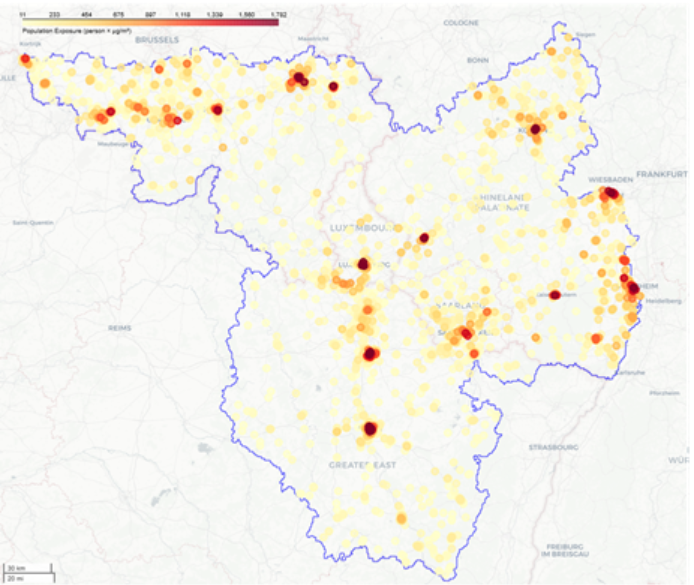
But concentration alone tells only half the story. When the researchers factored in population density using a population-weighted exposure metric, schools emerged as the highest-risk locations, with some schools showing exposure values exceeding 4,000 person × μg/m³.
The spatial distribution of exposure closely tracked major urban centers: Luxembourg City, Metz, Nancy, Liège, Trier, and Koblenz all showed elevated levels, while rural POIs fared better. A GINI index of 0.27 indicated low-to-moderate inequality in exposure, but the localized hotspots identified by the research demand targeted mitigation strategies.
Why This Work Matters for Urban Planning
The research doesn’t just diagnose a problem, it points toward solutions. The findings underscore the need for:
- Traffic-related emission reductions in urban environments through low-emission zones and improved public transport.
- Careful consideration of school locations in urban development planning.
- Proactive, “exposure-aware” urban densification using land-use change simulation models.
The Real Value
Beyond the sessions, this conference was a chance to connect with the global scientific community. It offered something far less tangible, and arguably more valuable, than a presentation slot.
Between the keynote lectures and parallel sessions, the corridors of ISEP buzzed with something you can’t replicate on a screen. Over coffee breaks that always stretch longer than scheduled, I found myself in discussions with researchers, professors, and professionals from institutions across Europe and beyond.
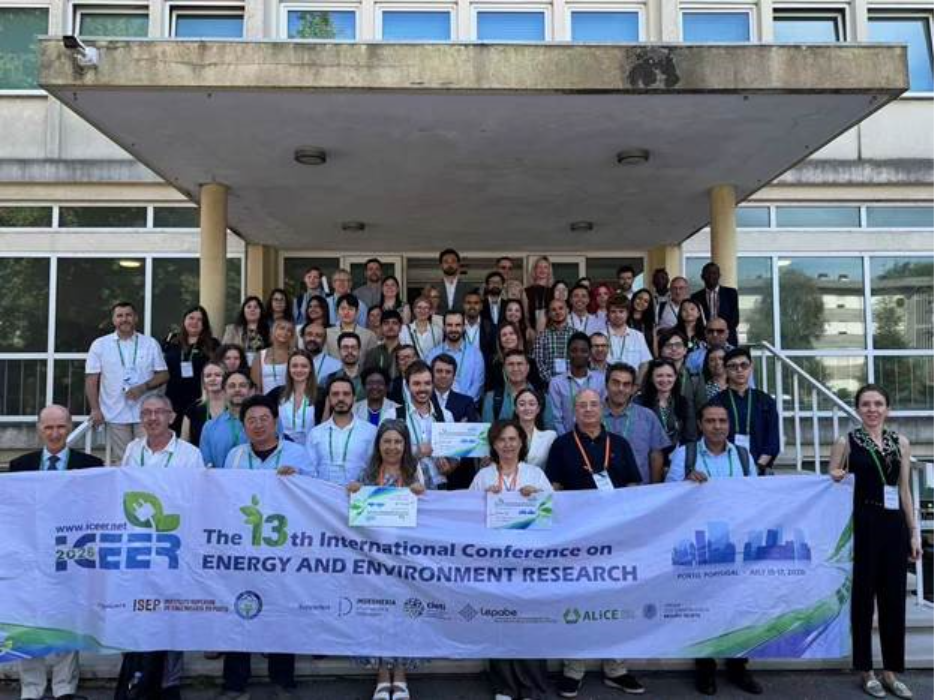
Image 4. Picture of everybody attending the conference.
On the personal side, the best presentation award at ICEER 2026 is more than a career milestone. It’s validation that our recent work (that was the result of the past 3 years of research works with various directions converging together into an impactful outcome) can inform policies that protect children, seniors, and communities in Luxembourg and beyond.
And if they happened to celebrate that award while overlooking the Atlantic Ocean at sunset… well, that’s just Porto working its magic.
The 13th International Conference on Energy and Environment Research (ICEER 2026) was held July 15–17, 2026, at the Polytechnic Institute of Porto, Portugal. Our paper was peer-reviewed and accepted to be published by Springer in the Environmental Science and Engineering Book Series.