
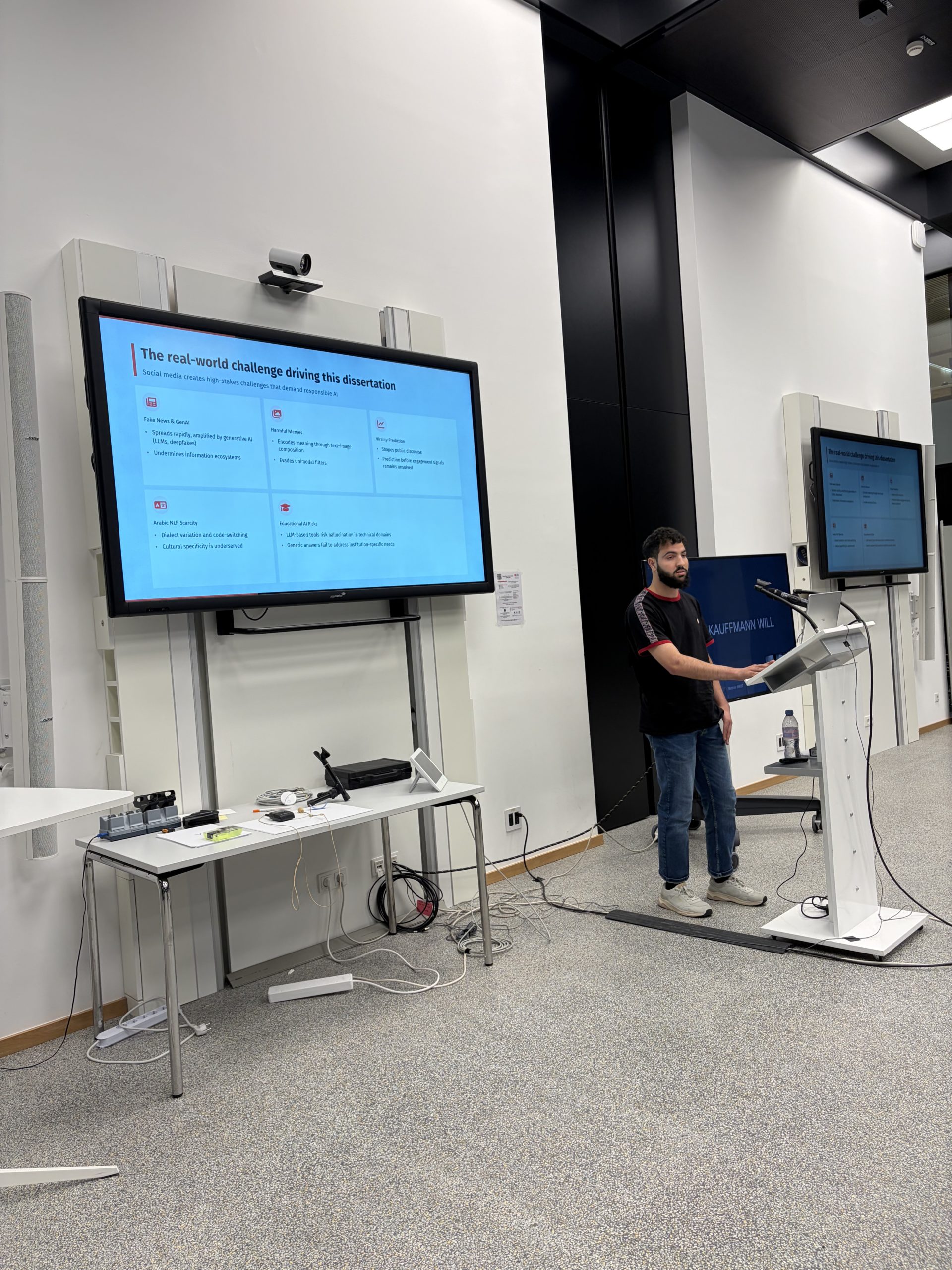
Discover how HPC-MentorFlow and the History of Lesbos Chatbot use AI to make learning more personalized, reliable, and adapted to specific educational contexts.

Author: Samir El-Amrany
Samir is a PhD candidate at the Faculty of Science, Technology and Medicine (FSTM), University of Luxembourg. Samir works on social media analysis and mining, HPC and digital history.
High-Performance Computing (HPC) is now widely used in many fields, but developing the skilled professionals needed to work in HPC environments remains challenging. Existing training programs often cover general concepts but may lack the local knowledge needed to reflect the specific tools, practices, and requirements of a given HPC center. HPC-MentorFlow was developed by Thailand’s National Electronics and Computer Technology Center (NECTEC) in collaboration with the University of Luxembourg to help address this gap [1].
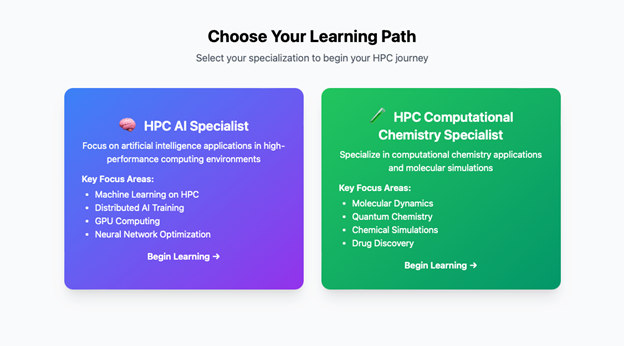
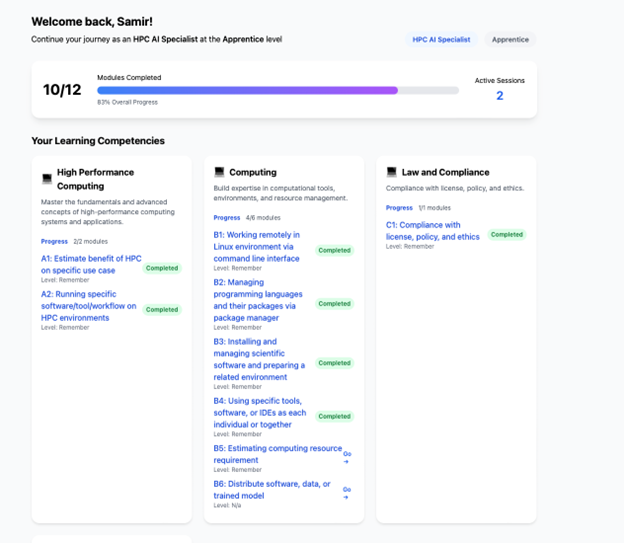
HPC-MentorFlow uses Retrieval-Augmented Generation (RAG) to ensure that the information provided by its internal LLM is factually correct and based on the knowledge bases of the HPC institutions themselves. This helps reduce the problem of generic responses that LLMs often produce. In addition, since HPC-MentorFlow’s knowledge base is built around the different skills required in the HPC field, as well as the capabilities of staff members within each institution, the training provided to new learners can be adapted to each institution and its specific requirements [1].
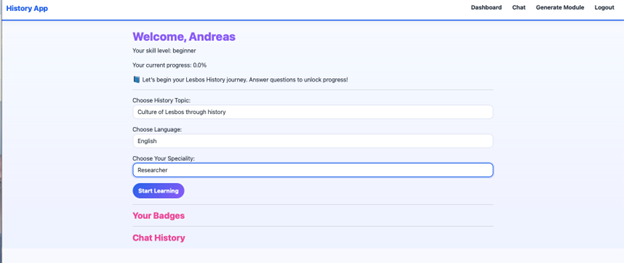
Beyond using AI to train HPC professionals, AI can also support education in other fields. One instance is the History of Lesbos Chatbot, which was adapted from the HPC MentorFlow architecture. Instead of focusing on technical HPC training, this system supports the teaching of the history of Lesbos through multilingual interaction and profile-based adaptation. This shows that the same educational AI design can be applied beyond technical domains and used in the humanities as well. HPC-MentorFlow and the History of Lesbos Chatbot show the need for educational AI systems that are trustworthy, verifiable, and adapted to specific learning contexts.
References
[1] El-amrany, Samir, Viwan Jarerattanachat, Matthias R. Brust, Johnatan E. Pecero, Apivadee Piyatumrong, and Pascal Bouvry. “HPC-MentorFlow: Strengthening Institutional HPC Competencies through an LLM-Enhanced Tutoring System.” In 2026 18th International Conference on Knowledge and Smart Technology (KST), pp. 34-39. IEEE, 2026.