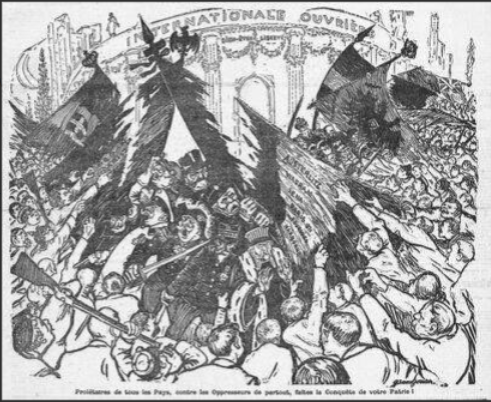
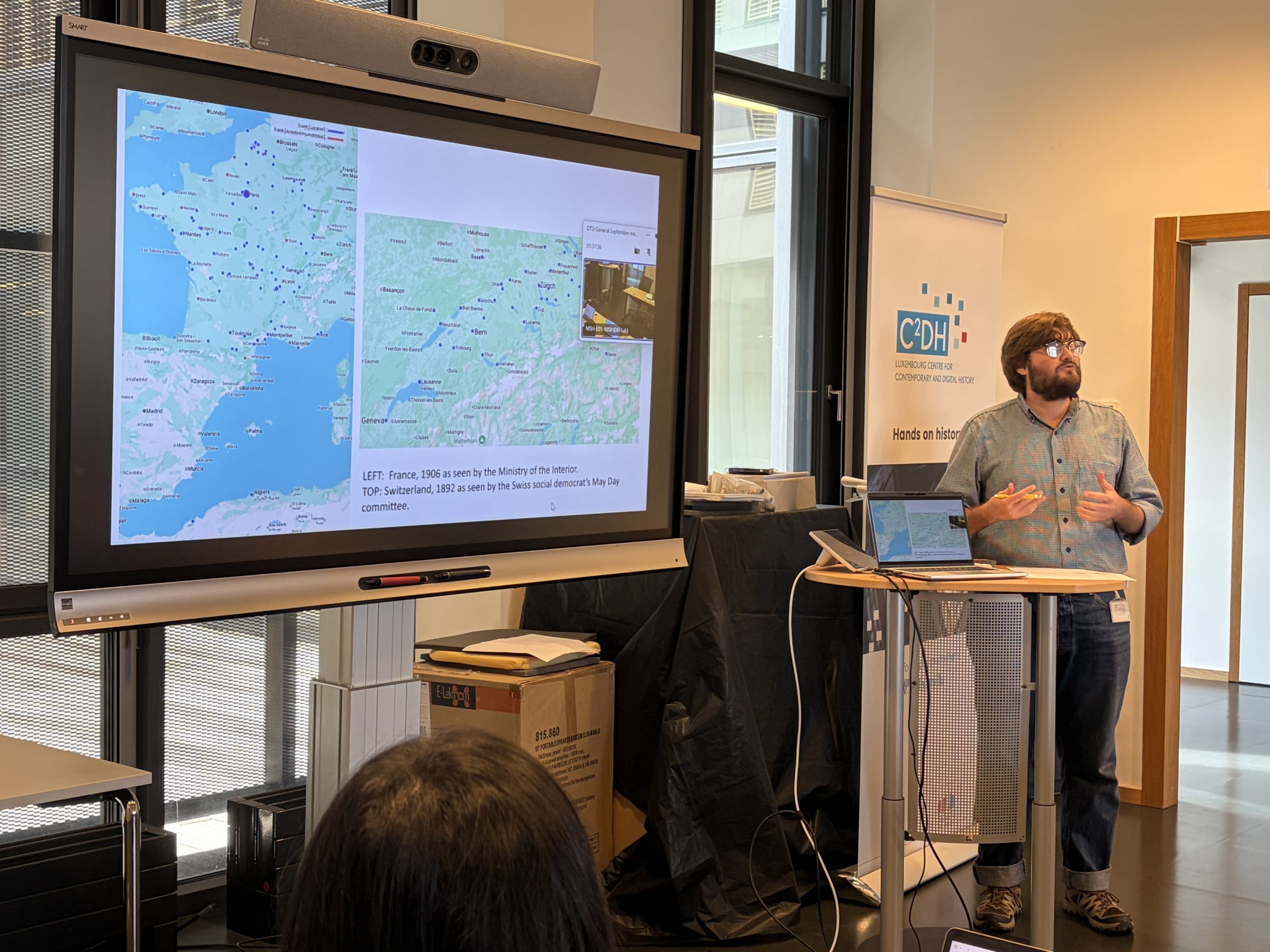
What is an article about the First of May doing a journal about joy and happiness? By unraveling the contradictions of a working-class tradition we are confronted with fundamental questions of joy, resistance, and the power of ritualization.

Author: Andrew Pfannkuche
Andrew is a PhD student working at the C2DH. He works on the project ‘Making Global May Day: A History of International Workers’ Day from 1886 to Tomorrow” under the supervision of Frédéric Clavert.
Last year, I published an article about the First of May in France for the Journal of Festive Studies, a journal that is so wonderfully named that many people have a double-take upon hearing it. It also, many of those same people wonder, introduces the question of why there should be anything about the First of May in such a festive publication?
The article is part of an issue dedicated to the question of “Joy as Resistance,” a supposed oxymoron that, when closely studied, reveals how humans constantly create and inhabit joyful settings for countless reasons. The questions posed by the issue’s editor, Miguel Valerio, strike at the heart of festive studies and its origins in the reception of Mikhail Bakhtin’s book Rabelais and His World in western Europe and northern America. The First of May, I argued, fits perfectly into the question of joy as resistance and I used the example of France before 1914 to argue my case.
My sources from two departments (the Loire and Maine-et-Loire) revealed that, contrary what many French scholars have written about May Day, the event was defined by gleeful merrymaking and joyful activities. Activists wrote poems about the happiness of springtime, workers would sing and dance throughout the night, and organizers hosted “…fraternal punch[s] in the name of all the workers of the universe” (page 193). These joyful activities fly in the face of many historians who insisted that the First of May is a serious and revolutionary event not to be taken lightly.
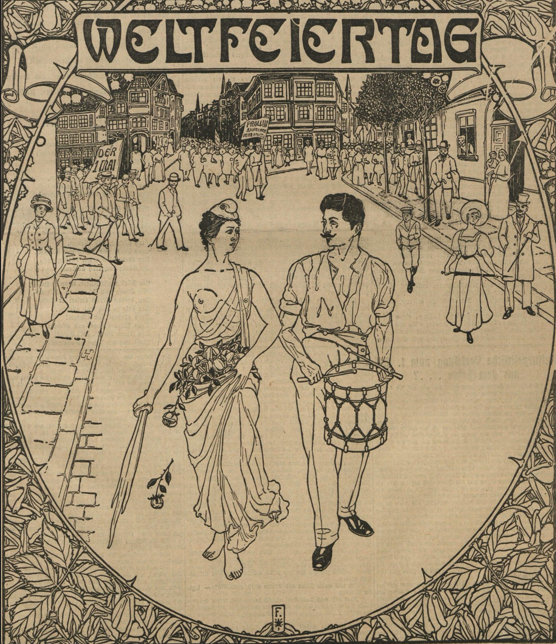
So, readers might assume, May Day was a site of resistance through joy in France before 1914. Enter Bakhtin.
In Rabelais and His World, Bakhtin argued the grotesque and vulgar image of Carnival we find in medieval and early modern literature were moment of joy for those who lived through the events. Unlike our modern carnival, the medieval Carnival of Bakhtin was an intense moment when the world was ritually turned upside down for a set period of time. Once a year, every year, kings briefly became commoners and the commoners were kings. This ritual overturning, Bakhtin argued, rendered the very idea of a new social order ridiculous and counterintuitively to protected monarchs from their vulgar subjects. As medieval carnival declines, Bakhtin’s theory suggests, real revolutions finally become possible across Europe.
I will conclude with nuance. In France before 1914, the First of May never challenged the social structures of patriarchy and imperialism. Many (male) socialists saw the cause of women’s liberation as a bourgeois obsession and colonialism as something that could be rendered “progressive” by a socialist government. May Day’s festivities often reinforced these ideas with colonial inspired games that took place at the “family festivals” that women were left to organize. However, I argued, the First of May also forged new structures of solidarity and community among a French working-class whose previous communities had been destroyed by the process of proletarianization. These new communities made organizing a strong working-class movement possible and that strong working-class movement made a more equal society possible as well.
Despite resembling Bakhtin’s carnivalesque, the First of May was a form of resistance that featured joyful songs, drinks, and community. That’s what I found in my sources from two French departments between 1890 and 1914.