
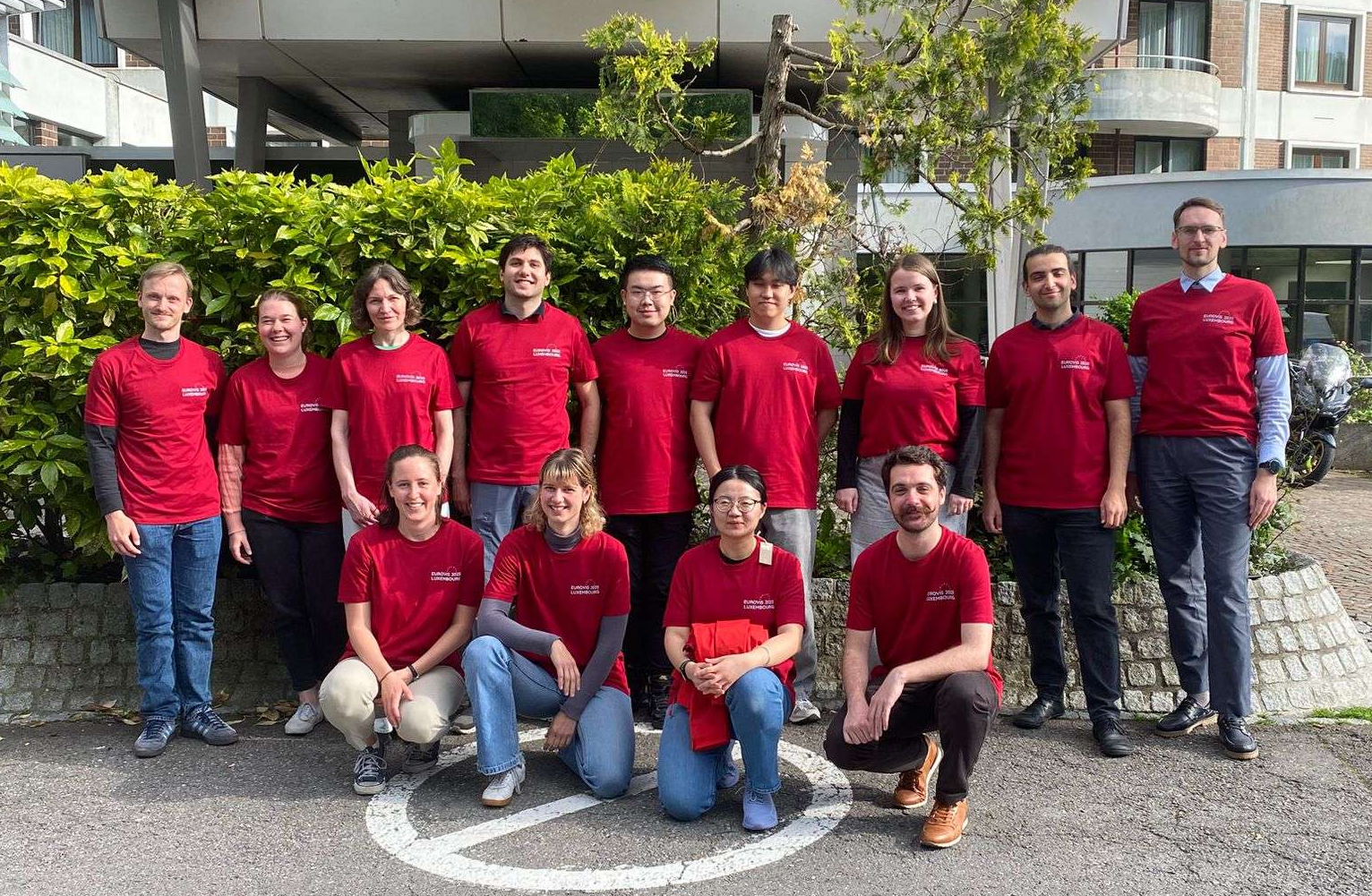
Get to know the 2026 Eurovis Conference (the annual European conference on data visualization and visual analytics research) as well as the leadership role of our own DTU post-doctoral researcher Eloi Durant in it.

Author: Eloi Durant
Éloi is a postdoctoral researcher in the Visualization and Interaction group at LIST, under the supervision of Mohammad Ghoniem.
EuroVis—not to be confused with the Eurovision Song Contest1—is the annual European conference on data visualization and visual analytics research. Taking place this year in Nottingham, UK from 8–12 June 2026, this Eurographics event is an exciting occasion for hundreds of researchers from Europe and around the globe to present their work, take part in workshops, meet both former and future colleagues and, for many young researchers, take their first steps in the visualization community.
With the next edition coming soon, it is a perfect occasion to take a look back at the previous edition, which took place for the very first time in Luxembourg! I had the honor of helping shape it as its Student Volunteer Chair: an equally thrilling and draining task.
Student Volunteering
Contrary to what one might first believe, large scientific events are rarely handled entirely by professional companies. More often than not, they rely on teams of dedicated scientists taking on the challenge of organizing the event for the greater good.
This includes calling for papers, organizing reviews for posters, workshops, demos, and papers of all lengths, and planning the talk schedule. But it also involves substantial behind-the-scenes work, both before and during the conference. This is where Student Volunteers (SVs) come in.
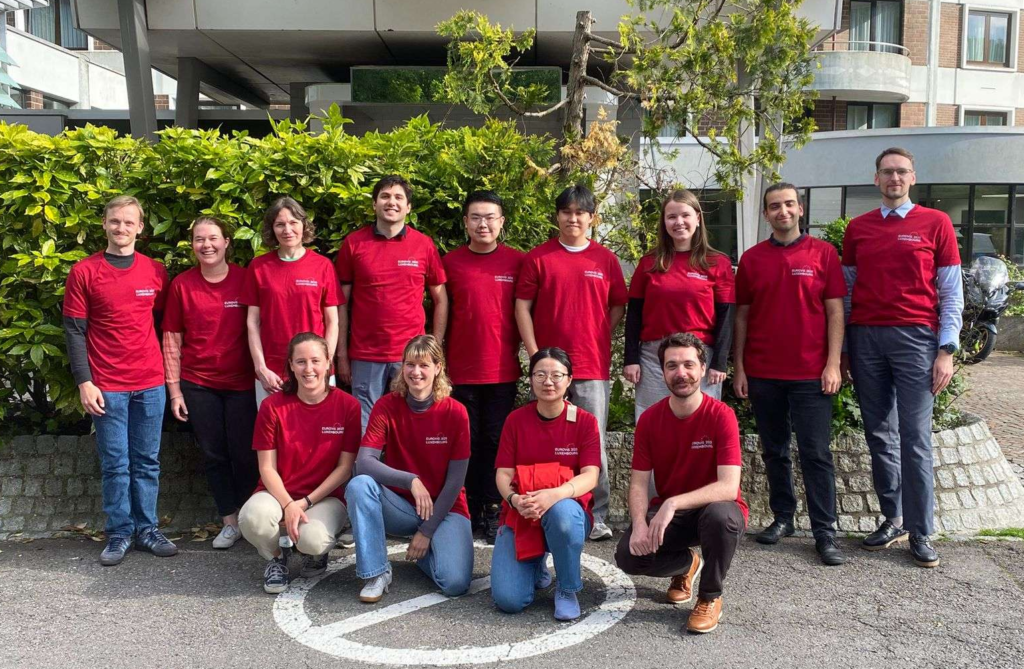
Student Volunteers, to the surprise of no one, are students willing to give some of their time during the conference to help the organization, usually in exchange for exposure free registration and a few other perks (reduced accommodation fees, SV T-shirts, …).
Though anyone can apply to be an SV, the number of available positions is limited and depends on the budget and tasks at hand. Besides attending the conference, it is also a great opportunity for students to connect with the visualization community, talk with established researchers, and break the ice.
The duties of SVs vary from year to year depending on the local team and venue. In Luxembourg, we were lucky enough to already have people in charge of setting the rooms and welcoming attendees, so the SVs could mostly focus on helping session chairs and handling technical issues.
Becoming a Student Volunteer
The conditions for being chosen as an SV for EuroVis vary every year depending on the local organizing team. In our case, we wanted to reflect the diversity of the visualization community, which is one of its great strengths.
Participants were PhD students selected to form a gender-balanced team, representing different labs, countries, thesis stages, and levels of previous SV experience.
Each applicant was evaluated anonymously based on a dozen criteria: were they presenting work at the conference? Had they recently volunteered at related conferences? How well did their motivation statement align with EuroVis and their career goals? To keep the process fair, these points were evaluated independently by colleagues before being combined into a final score, which determined the selection order.
Of course, this was only our process for EuroVis 2025. The rules may differ widely between conferences, or even between editions of EuroVis. I would therefore highly encourage any interested student to keep an eye out for Student Volunteer calls and apply without overthinking their chances: rules change, and shots not taken never reach their target.
Becoming the Student Volunteer Chair
As part of the VisInt2 group at LIST3, I was already part of the organizing team, which eased me into the chairing position (usually given to young researchers with previous student volunteering experience).
My goals, as the Student Volunteer Chair, were to recruit volunteers, plan their work schedule and assignments, efficiently communicate on a daily basis, and ensure that they could also enjoy the conference: SVs are attendees too, after all. Potential first-timers even! It is a duty involving both delegation and hands-on participation, requiring substantial planning to make the experience as smooth as possible.
In my case, this translated into many detailed emails ahead of the conference, gathering each student’s preferences and time constraints into a balanced schedule, and preparing a get-together to break the ice.
It also meant organizing two dedicated Discord servers: one to centralize information and enable fast exchanges, the other as a last-minute effort to support unexpected online presentations. Adaptability is definitely required for such a job, and I ran around much more than I had expected.
Takeaways
Overall, it was a wonderful experience. Tiring, true, but getting to know the next generation of researchers and seeing the inner working of such large events made the effort more than worth it.
In retrospect, it also shaped my understanding of what being a researcher means. It is far more multifaceted than I would have expected during my time at university. It goes far beyond “doing good research” and is profoundly human. It involves being rigorous, resilient, knowledgeable, and curious, of course. But it is also about being considerate, caring, empathetic, and, somehow, lucky.
Footnotes
- Eurovision, which welcomed in 2024 its first Luxembourgish entry in 30 years! ↩
- Visualization and Interaction ↩
- Luxembourg Institute of Science and Technology ↩