
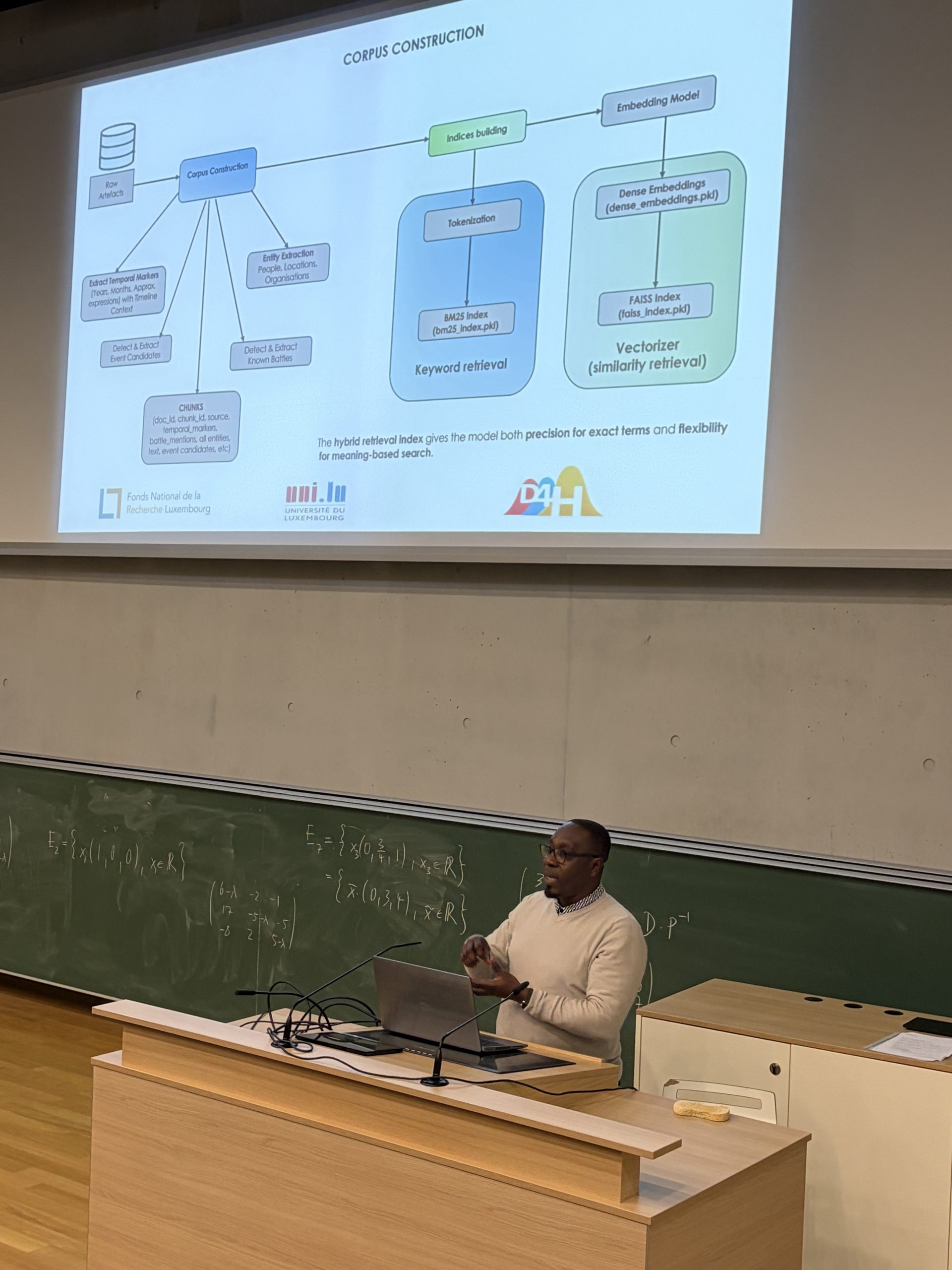
Reflections on presenting a unified retrieval framework for historical text generation at the 12th International Conference on New Findings in Humanities and Social Sciences in Oxford.

Author: Prince Yaw Gharbin
Prince is a Doctoral Researcher at the FSTM. He works on the project “Creating Historical Stories with Illustrations for Digital History using Natural Language Processing and Deep/Machine Learning Models” under the supervision of Christoph Schomer.
Attending the 12th International Conference on New Findings in Humanities and Social Sciences, held from 22–24 August 2025 in Oxford, United Kingdom, was both an enriching and inspiring experience. The conference brought together researchers, academics, and professionals from diverse disciplines to discuss emerging ideas, innovative methodologies, and interdisciplinary approaches shaping the future of humanities and social sciences research.
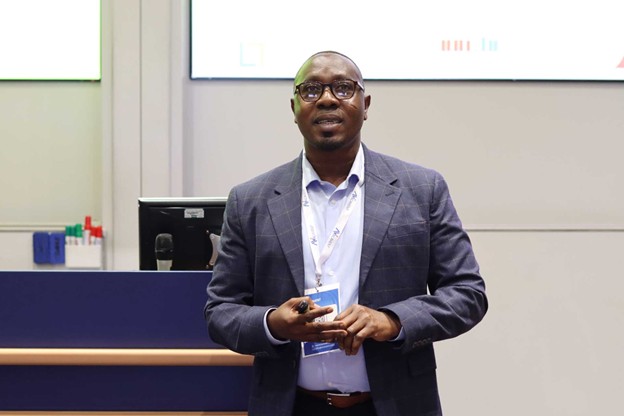
I was honoured to participate in the conference as an invited speaker, where I presented my research paper titled “Bridging the Past with Artificial Intelligence: A Unified Retrieval Approach for Historical Text Generation.” My presentation explored how artificial intelligence, particularly retrieval-augmented generation and graph-based reasoning techniques, can support the interpretation and generation of historically grounded narratives from World War I archival materials. The discussion highlighted the importance of transparency, provenance, and explainability in AI-driven historical systems, especially within the context of digital humanities and historical question answering.
The conference provided an excellent platform for intellectual exchange and collaboration. I had the opportunity to engage with scholars working in areas such as digital history, social theory, education, linguistics, and emerging technologies in humanities. These interactions offered valuable perspectives on how computational methods can complement traditional historical research and interpretation.
One of the most rewarding aspects of the event was the positive feedback and thoughtful discussions that followed my presentation. Conversations with fellow researchers opened new possibilities for interdisciplinary collaboration and future research directions, particularly in explainable AI and digital historical storytelling.
Beyond the academic sessions, the experience of visiting Oxford added a unique cultural and scholarly atmosphere to the conference. Overall, the event was a meaningful opportunity to share my research, learn from others, and contribute to ongoing discussions at the intersection of artificial intelligence and humanities.