DTU Book of Abstracts
At the DTU, we hold monthly meetings where our PhD students regularly share work in progress, receiving comments and feedback from everybody in our community. We are so lucky to have such a brilliant, hardworking, and diverse group of young doctoral researchers with so many great ideas and projects going on! Bellow you can find our very own “DTU book of abstracts“, with pictures and a brief description of each PhD student presentation.
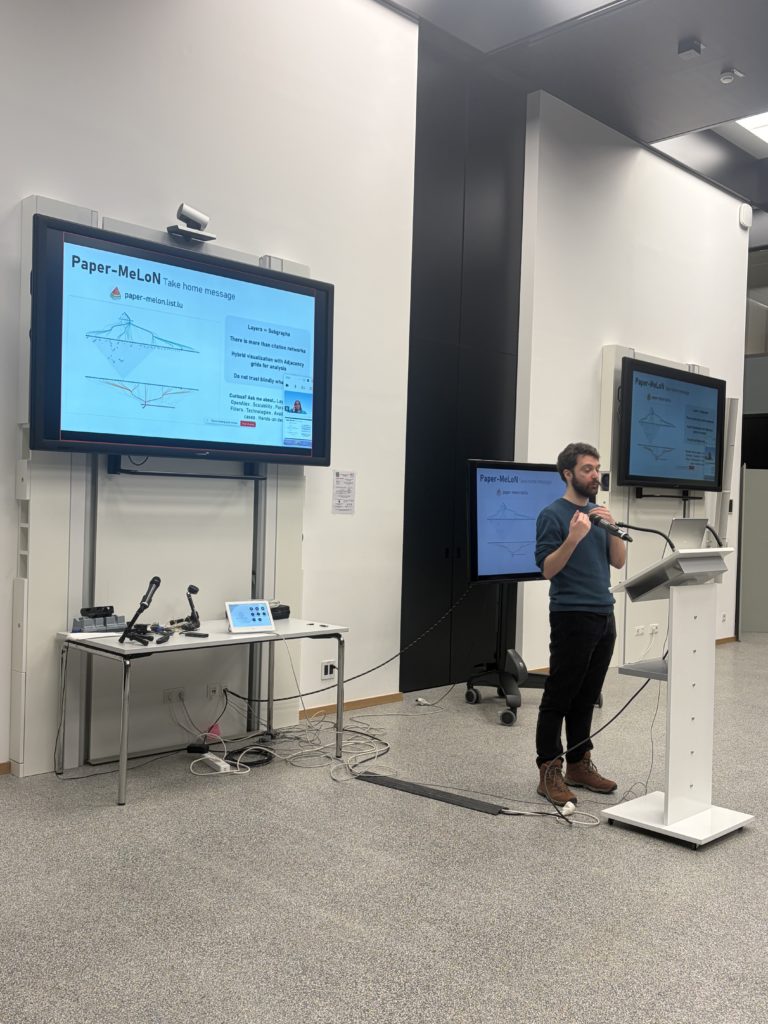
Paper-MeLon: Literature review networks through the multi-layer lens
by Eloi DurantSystematic literature reviews require reviewers to screen hundreds or thousands of scientific papers and classify them as relevant or irrelevant. During the first screening stage, reviewers must examine each paper’s title and abstract and decide whether it meets the review’s inclusion and exclusion criteria. This process is time-consuming and labor-intensive, especially since the papers ultimately included in the review often represent less than 5% of the initial corpus. We envision that multilayer networks can help researchers navigate these large corpora and identify relevant papers earlier in the process. We present Paper-MeLoN, a web interface for exploring multilayer literature networks in which each layer represents a type of relationship between papers. These relationships may be explicit, such as direct citations, or inferred from shared attributes, such as common authors or concepts.
The interface provides a range of interactive features, including term search within the dataset, filtering mechanisms, labeling of undecided papers as included or excluded, and bibliography export at any stage of the process. In this presentation, we illustrate a “review update” use case using previously published literature reviews and bibliographic data collected from OpenAlex.
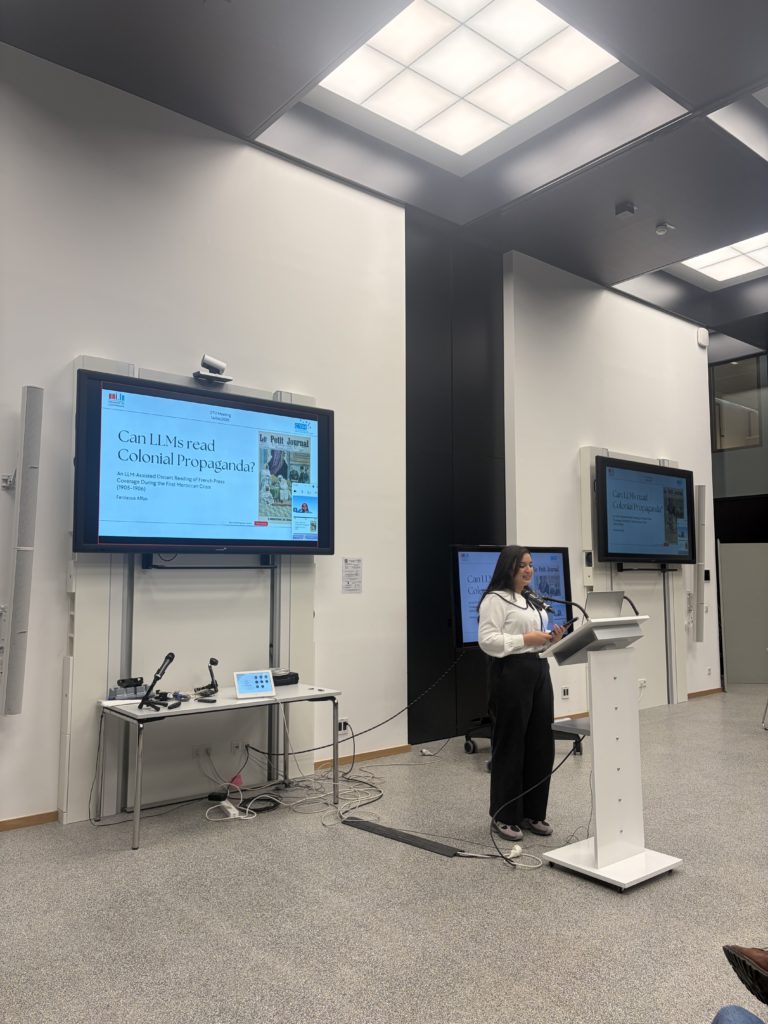
Can LLMs read Colonial Propaganda? An LLM-Assisted Distant Reading of French Press Coverage During the First Moroccan Crisis (1905–1906)
by Ferdaous AffanColonial propaganda in the fin-de-siècle French press operated across multiple semantic registers: explicit vocabulary, narrative framing, naturalized presuppositions, and strategic silences. Keyword searches help capture the first; binary classifiers collapse the rest. This presentation examines what large language models contribute to the historical analysis of such layered discourse, and where their readings require correction. Drawing on a case study from my doctoral project, on French press coverage of the First Moroccan Crisis (1905–1906), it proposes the Colonial Communication Analysis Framework (CCAF), a hierarchical taxonomy grounded in postcolonial theory and developed iteratively from close reading of primary sources. The CCAF articulates three universal functions (Legitimation, Demonization, Naturalization), thirteen strategic categories, and case-specific lexical instantiations, structured around a six-question communication model adapted to colonial discourse.
The framework is operationalized through a four-stage LLM annotation pipeline applied to a corpus of 4,103 articles from five French newspapers of distinct editorial orientations, retrieved via the Impresso platform and supplemented by diplomatic and parliamentary sources. Multiple models (GPT-5.4, GPT-5 Mini, Claude Sonnet 4.5) annotate each article along four axes — intensity, strategic category, rhetorical trope and the 6-question model — and their outputs are compared to assess inter-model agreement and threshold sensitivity. Annotations are then returned to close reading in an iterative loop.
Two findings anchor the discussion. First, Epistemic Erasure emerges as a structural feature across newspapers and models, while rhetorical registers vary with editorial audience. Second, inter-model comparison shows convergence on dominant categories but divergence on classification thresholds, raising questions about reproducibility and model drift in historical scholarship.
Beyond Murdock: Polygyny Across Time. European Travel Narratives and the dynamic history of African Marriage Systems
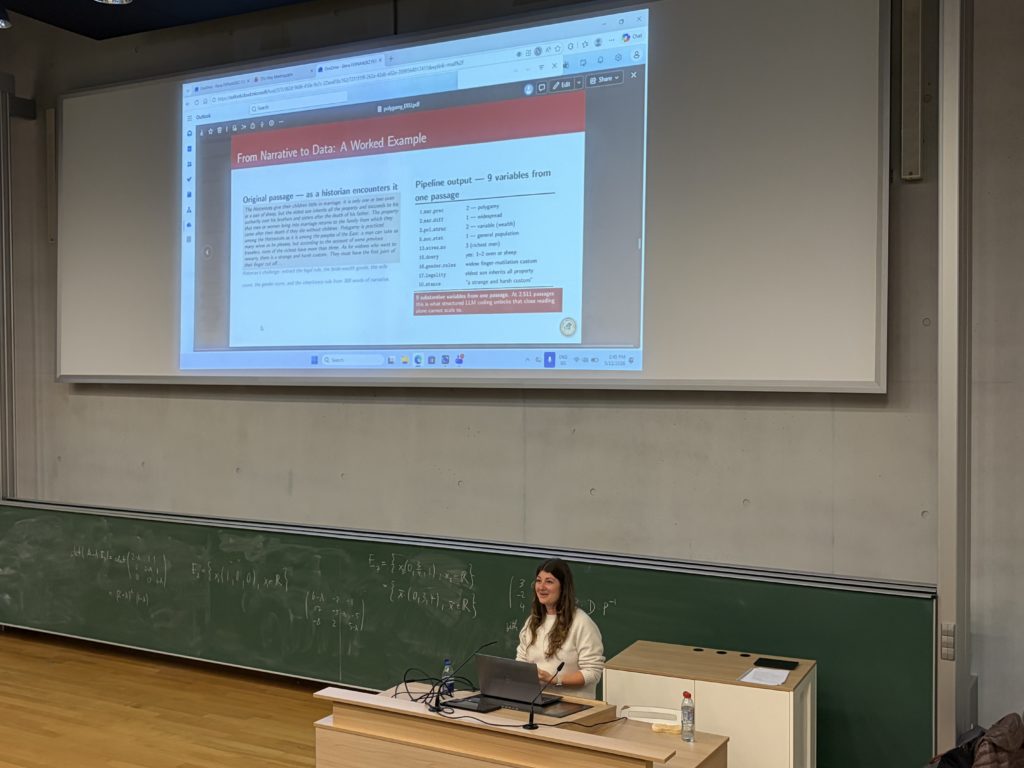
by Lauren CoetzeeHow much do we really know about marriage in pre-colonial Africa? Most economic history research relies on Murdock’s Ethnographic Atlas — a dataset compiled largely between 1890 and 1960, after colonialism, Jihad movements, and missionary contact had already transformed the continent’s social institutions. In this paper, we argue that Murdock’s Column 14 captures a post-shock equilibrium rather than a pre-colonial baseline, and that the “polygamy belt” visible in contemporary data is likely a colonial-era artefact rather than a timeless cultural feature.
To test this, we turn to the Time Traveller corpus — 2,994 European travel accounts spanning 1600 to 1900 — and apply an LLM-assisted classification pipeline to extract structured evidence from historical prose at scale. Across 2,511 classified passages, we find that polygamy was documented continent-wide rather than concentrated in West Africa, and that Murdock’s single binary code collapses two fundamentally different institutions: widespread general-population practice and rare elite polygamy used as a political instrument. Three distinct mechanisms of change — Islamic expansion, missionary contact, and colonial state formation — are all visible and distinguishable in the sources.
The result is the first dataset enabling panel estimation of polygyny prevalence with regional and temporal variation across 300 years of pre-colonial Africa, with observer-bias controls built in as a coded variable.
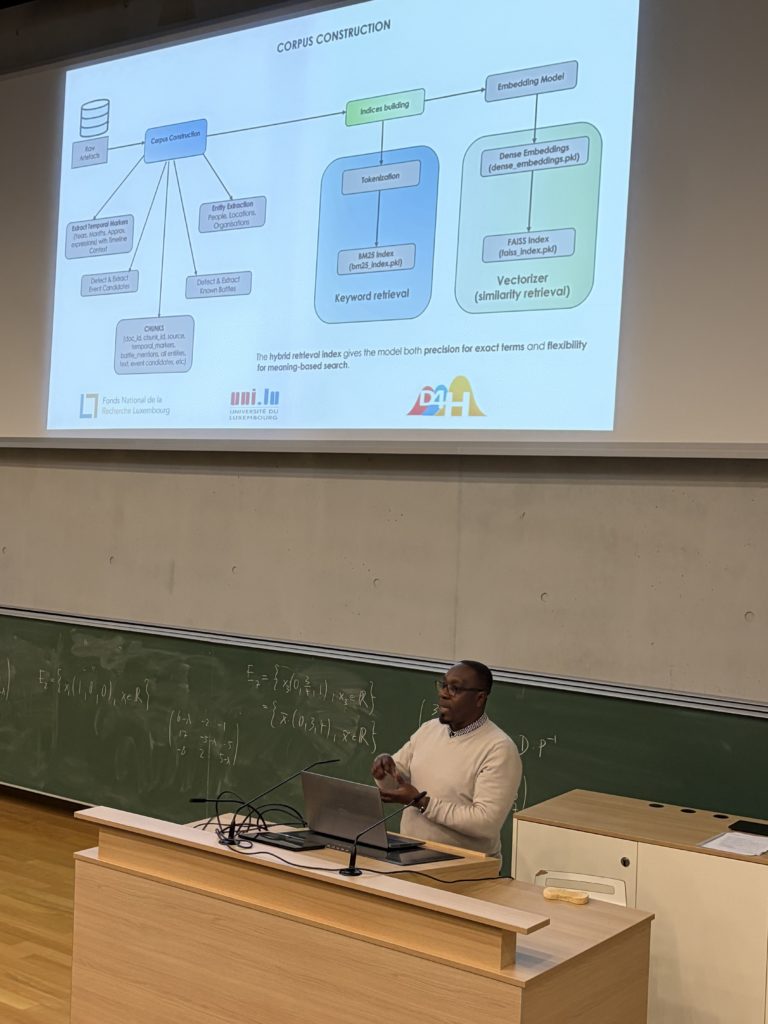
Explainable Narrative Generation in Digital History Systems (World War I British Artefacts 1914 – 1918)
by Prince Yawn GharbinThis research investigates explainable narrative generation within digital history systems through the development of a computational framework focused on British artefacts from World War I between 1914–1918. The study addresses a central limitation in existing historical question answering and retrieval systems: while such systems can identify relevant documents or passages, they often fail to explain how events unfolded over time, how historical developments are connected, and why particular outcomes emerged. Historical interpretation requires more than information retrieval alone; it demands transparent reasoning processes capable of connecting fragmented evidence, tracing temporal progression, and exposing causal relationships across sources.
To address this challenge, the research proposes a graph-based temporal-causal reasoning framework centered on a directed event graph constructed from World War I archival materials. Within this structure, each event node represents a historical occurrence enriched with attributes. Directed edges encode temporal and causal relationships, enabling the system to model both event sequences and inter-event dependencies. Through graph traversal and multi-hop reasoning, the framework identifies relevant event pathways, which are subsequently transformed into source-grounded historical narratives using large language models.
Unlike retrieval-only approaches, the proposed system emphasizes explainability and interpretive transparency by exposing intermediate reasoning steps, relation types, provenance information, and confidence scores. The research further integrates retrieval methods, event-centric knowledge graphs, temporal reasoning, and narrative generation into a unified analytical environment that supports explainable historical inquiry. In doing so, the study contributes to digital history by demonstrating how computational systems can support historically grounded explanation rather than simple document retrieval.
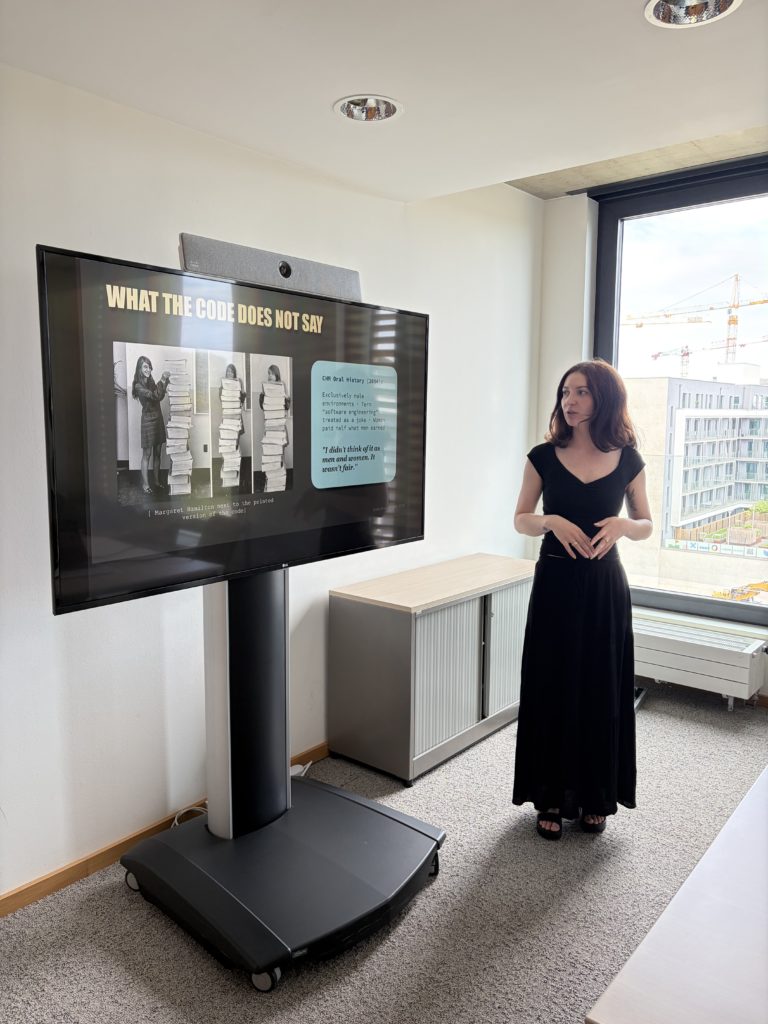
Code as Heritage: Preserving and Interpreting Software as Historical Evidence
by Titayna Kaufmann WillEvery digital system we interact with is built on layers of code that capture decisions, assumptions, and values. Yet historians have rarely developed the tools to read it as a primary source.
This presentation introduces a lesson developed for the RANKE.2 platform that teaches historians to approach source code as both technical artifact and cultural expression, through three dimensions: the recognition of source code as born-digital heritage, the application of source criticism methods to code artifacts, and the institutional infrastructures through which software is being preserved today.
Drawing on case studies ranging from the Apollo Guidance Computer to the Microsoft BASIC lineage, it argues that reading code historically require methodological adaptation. The lesson connects directly to broader research on code as a primary historical source, contributing a pedagogical dimension to theoretical arguments about what it means to treat software as evidence rather than infrastructure.
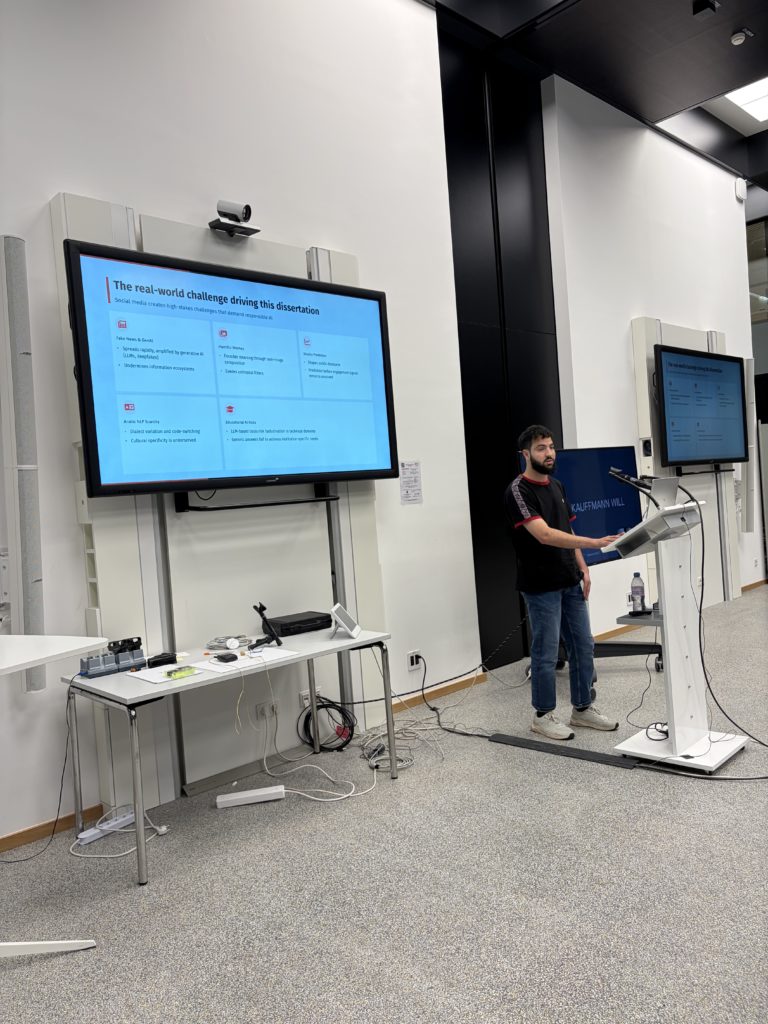
Responsible Multimodal Language Technologies for Social Media Understanding and Educational AI.
by Samir El-AmranyThe dissertation develops trustworthy multimodal language technologies. It addresses fake news, harmful meme detection, virality prediction, Arabic commonsense reasoning, and institution-grounded tutoring. Across these settings, the central argument is that reliable Natural Language Processing (NLP) systems require multimodal grounding, language- and culture-specific evaluation, and system-level safeguards that make outputs verifiable. First, the presentation presents Tri-FusionDet for multimodal fake news detection in English, combining textual, visual, and user-engagement signals to assess social media credibility on the Fakeddit benchmark. Second, it extends harmful content moderation through GuardHarMem, a large-scale English harmful meme dataset with fine-grained harm categories, and HarMDetect, a multimodal classifier that combines image, OCR-extracted text, and generated captions. Third, it introduces AraHarMeme, a 5,313-instance Arabic harmful meme benchmark designed for dialect-rich and realistic moderation scenarios. Fourth, it releases Reddit-V, a 27,587-post benchmark for pre-engagement virality prediction, and evaluates zero-shot language-model baselines, supervised non-visual controls, and fine-tuned multimodal models. Fifth, it presents ArabicSense, an Arabic-first benchmark for commonsense validation and explanation, showing the importance of task-specific fine-tuning for Arabic reasoning. Finally, it presents HPC-MentorFlow and LesbosMentorflow, two local-first retrieval-augmented tutoring systems that ground answers in institution-specific documents and structure learning through capability profiles, dependency graphs, and assessments.
The aforementioned contributions show that trustworthy language technologies require (i) multimodal grounding beyond text, (ii) language- and culture-specific benchmarks and evaluation, and (iii) system-level safeguards enabling verifiable transparency.
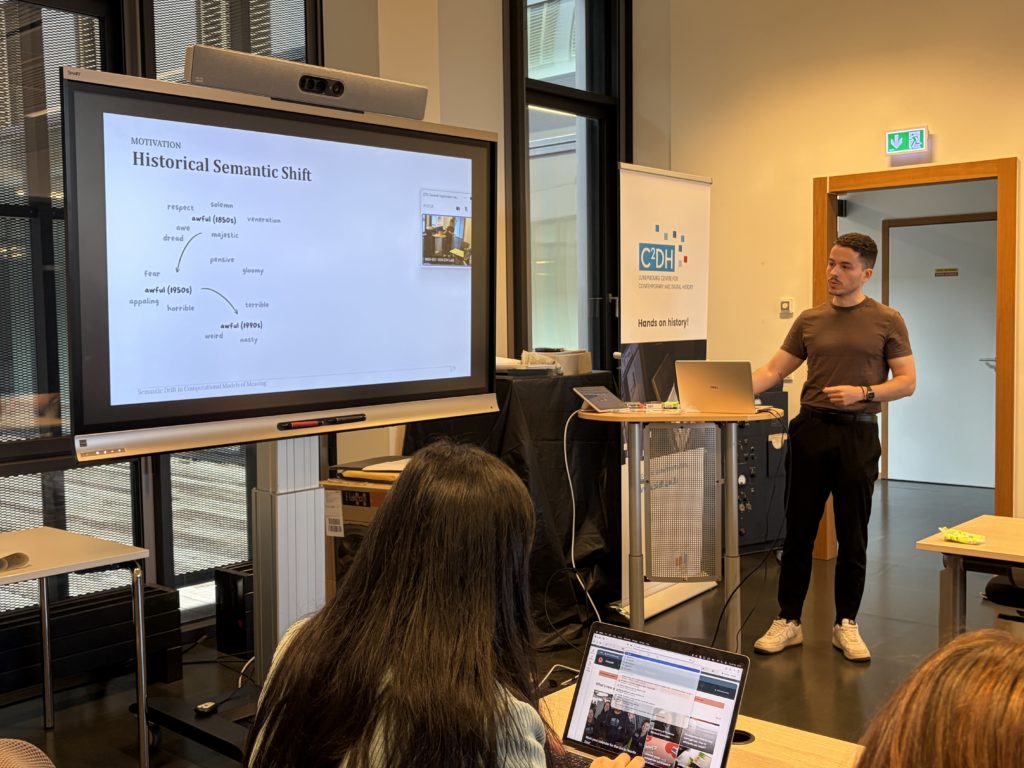
Lexical Semantics in LLMs
by Jader MartinsWhile LLMs present impressive results, they may often be correct for the wrong reasons. In this talk, we specifically focus on shortcut learning within lexical semantics. We show that state-of-the-art models often rely on unintended heuristics to solve sense differentiation, present our proposed solution, and discuss its broader implications.
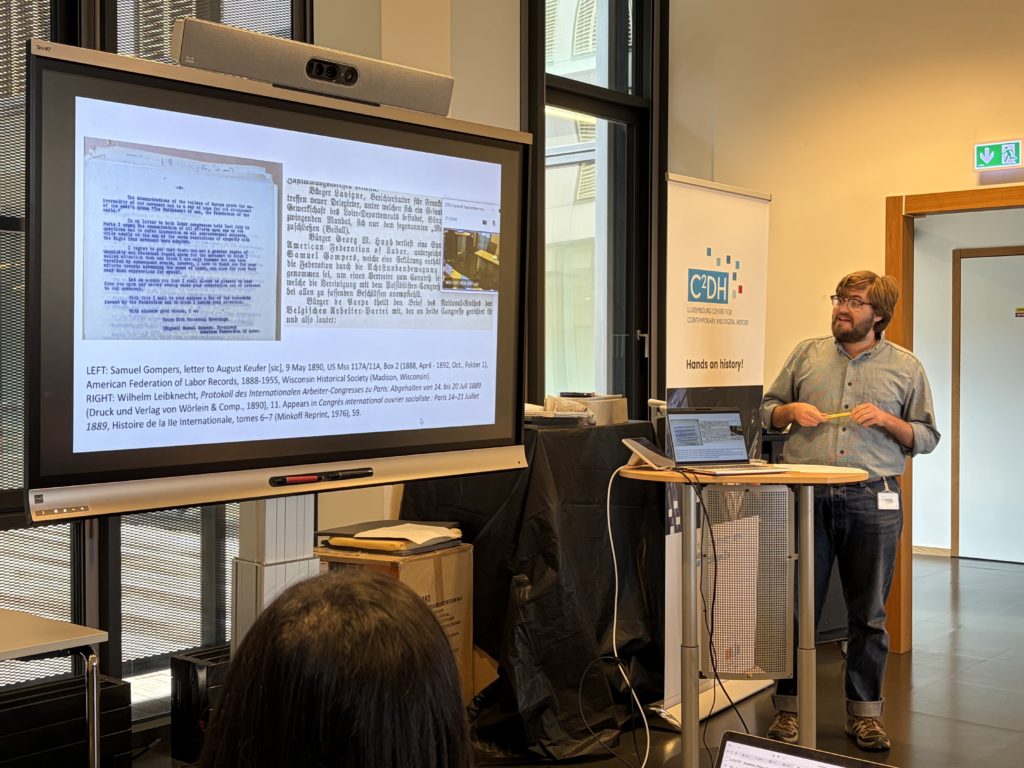
May Day in the Era of the Second International: Origins, Globalization, and Limits
by Andrew PfannkucheThe rise of global labor history has reinvigorated research into the history of international socialism, particularly in the era of the Second International (1889–1923). While previous histories of the labor movement have focused on the socialists internationals as institutions, researchers have finally turned their attention to the cultures of international socialism to understand the movement as it was understood by its participants, without reference to the organization’s supposed “failure” to prevent the Great War in 1914. One of the most important elements of that international socialist culture was May Day (the First of May, International Workers’ Day) which was first celebrated between 1890–2 and is now one of the most widely celebrated holidays across the world.
Despite the global nature of May Day, histories of the holiday have been nationally siloed, ironically turning a self-consciously internationalist holiday into dozens national holidays. Understanding the culture of international socialism requires us to understand the history of the May Day on the global scale. The debates that occurred within the Second International about the “meaning of May Day” touched the history of the holiday everywhere, making the details of how it was celebrated (or not) in one context critical to how it was understood in another.
Tracing the history of May Day in the era of the Second International gives us a geographic glimpse into the increasingly global nature of socialism. Socialism was no longer an “internationalist” body of thought, instead, it was a growing movement around the world. Seeing the presence of May Day across the globe shows us the power and prestige of socialism in the era of the Second International, the limits of an ideology born in nineteenth-century Europe, and the transnational nature of international socialism.
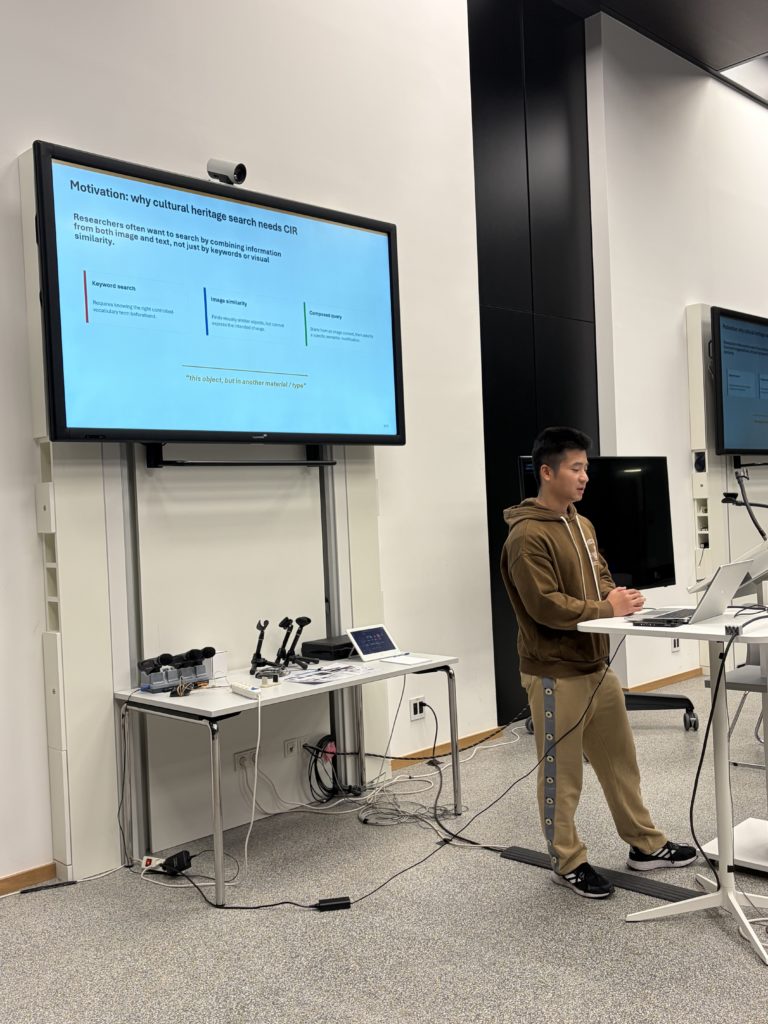
Composed Image Retrieval for Cultural Heritage Collections
by Fan XuComposed Image Retrieval (CIR) aims to retrieve target images from an image gallery by combining a reference image with a textual modifier describing desired semantic changes. While recent CIR approaches operate primarily in a shared multimodal embedding space to perform CIR tasks, we empirically investigate a generative single-modalitsubsequently encoded by state-of-the-art retrieval models to perform image retrieval against images in the collection. In addition, we examine the role of structured collection metadata in improving retrieval performance. In particular, we incorporate auxiliary metadata fields, including hierarchical annotations of materials and object types, as complementary information to the MLLM generation process.
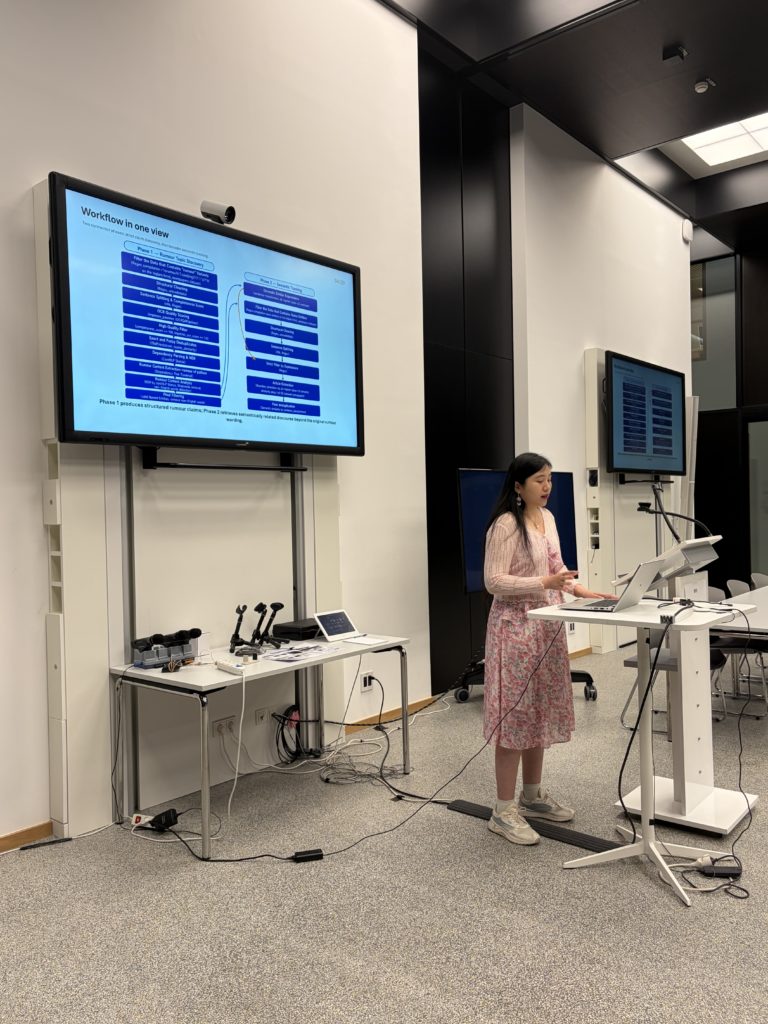
PRESTO: A Two-Phase Methodology for Discovering and Tracking Rumoured Events in Historical Newspapers
by Wanshu ZhangPRESTO (Pattern-based Rumour Extraction with Semantic Tracking Over historical newspapers) is a two-phase methodology for identifying and tracing rumoured events in nineteenth-century newspapers. It addresses two related problems: extracting the proposition contained within an explicit rumour frame and tracking the same event across articles that no longer use the word “rumour.” Phase 1 combines OCR-aware cleaning, syntactic parsing, named-entity recognition, and either rule-based or local LLM extraction to produce structured rumour claims. On a shared UK validation sample of 112 sentences, Qwen3 8B achieved 79.5% accuracy compared with 69.6% for the rule-based method, although the difference was suggestive rather than statistically conclusive. Because LLMs can fabricate text, PRESTO adds a word-overlap check against the source and excludes flagged outputs. Applied to British and American newspaper corpora, the pipeline produced 11,072 and 6,409 high-confidence sentences respectively. Phase 2 expands structured claims into semantically related expressions and retrieves wider event discourse beyond explicit rumour wording. Evaluation on three historical case studies shows that this substantially improves recall over exact-phrase search. PRESTO therefore provides a transparent, reusable framework for moving from linguistic rumour detection to event-level historical analysis while retaining explicit quality controls and auditable limitations across large, noisy digitised newspaper collections reliably.
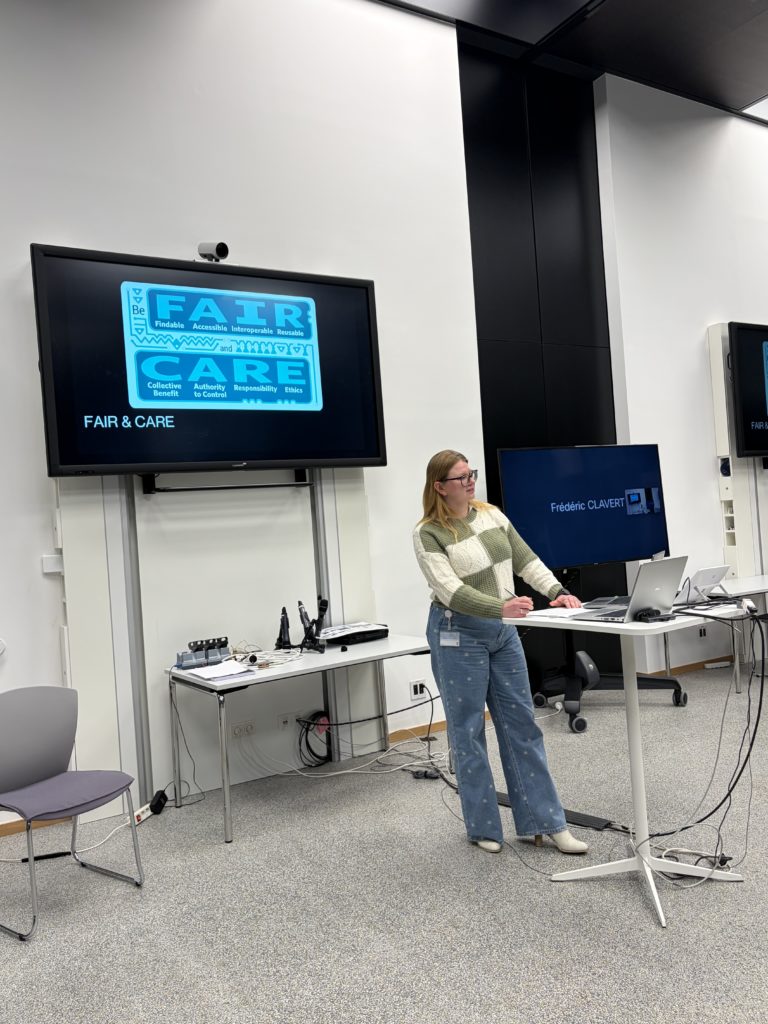
Why should we CARE?
by Julia GökeIn our work with the Digital Humanities Text Union (DTU), we closely align with the FAIR data principles (Findable, Accessible, Interoperable, Reusable). However, an essential extension of this framework is the CARE Principles for Indigenous Data Governance, established by the Global Indigenous Data Alliance (GIDA) in 2019. CARE—comprising Collective Benefit, Authority to Control, Responsibility, and Ethics—emphasizes Indigenous data sovereignty to counteract extractive practices rooted in data colonialism.
Specifically, Collective Benefit ensures data systems actively advantage local communities; Authority to Control upholds the community’s right to govern its own data; Responsibility addresses the ethical relationship between researchers and community members; and Ethics prioritizes the overall rights and well-being of Indigenous groups.
By asserting that Indigenous data remains community property and must be handled intentionally, the CARE principles served as a foundational guideline in developing the data design for “The Knowledge of the Old Location.” This project aims to digitize and make accessible private archival sources from the Old Location, a historically demolished Black neighborhood in Windhoek, Namibia.
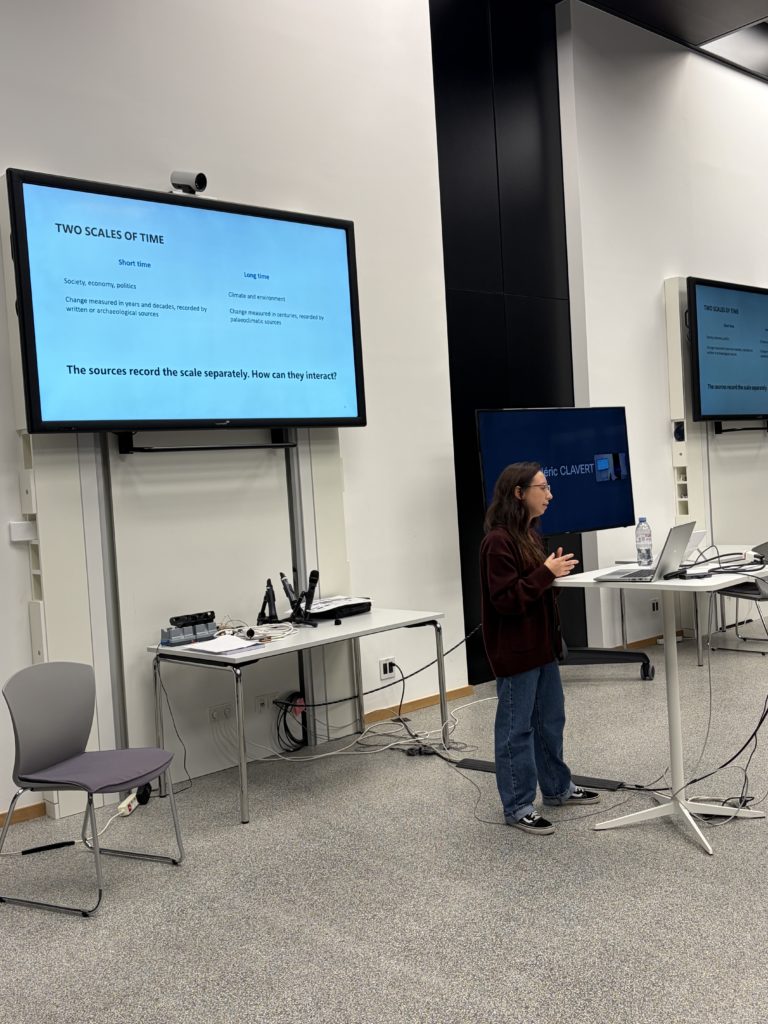
Spatial modelling of past settlement patterns: contributions and limitations of a quantitative approach to an uncertain record.
by Ilenia PetraruloThe period between Late Antiquity and the Early Middle Ages has been the subject of a long debate. On one hand, there is a “catastrophist” view, which interprets this period as a loss of civilisation and a dark age; on the other, there is an interpretation in terms of continuity and transformation, which has gained new momentum in recent decades thanks to the increasingly close interdisciplinary collaboration between archaeology and other disciplines. This historical period was also characterised by significant climatic variability, which archaeology of climate change studies from the perspective of the relationship between humans and the environment. This research explores this field, examining the relationship between the distribution of settlements and environmental and climatic conditions. The presentation will focus on the methodological aspects of the project, highlighting how computational methods have enabled the comparison of sources with different chronological resolutions and what new interpretative insights they offer for the study of a period of transition. The presentation is based on the contribution submitted for the DTU D4H collective volume.